Snowboards
The right snowboard makes every run more fun. Oberson carries snowboards for all riders, whether you dream of carving impeccable corduroy, weaving through glades, dialling in new tricks, or finding untouched lines in the backcountry. Our selection includes top brands, such as Burton, Nitro, K2, Jones, and Arbor. Shop for snowboards online or in our Brossard or Laval locations.
Riding snow is one of the true joys of winter. For maximum stoke, you’ll want a board matched to how and where you ride. Here’s a breakdown of what you need to know when looking for a new board.
Flex describes how easily a snowboard bends. Longitudinal flex is the bend from nose to tail, and torsional flex refers to that from edge to edge. A board’s flex is rated on a scale of one (softest) to ten (most rigid). Keep in mind that a given number might translate to different flexes across brands. A softer flex makes a board forgiving and playful. A stiffer flex offers stronger edge hold, more stability at speed, and powerful response.
A snowboard’s profile is its shape when viewed from the side.
Many boards mix these: camber underfoot with rocker at the ends for edge control plus float or other hybrids to fine-tune performance.
A snowboard’s shape is its outline when you look down from above. It’s the way the nose, waist, and tail are arranged. It influences how the board turns, floats, and rides switch (riding in both directions).
True Twin
The nose and tail are identical. This makes the board balanced for riding switch.
Directional
This shape has a longer, softer nose and stiffer, shorter tail. It’s great for carving and float in powder. These boards are usually ridden one way.
Directional Twin
This type of board has a twin-like outline, but the flex or stance is slightly set back. It’s versatile for all-mountain riders who mix switch and regular.
Volume Shifted
Shorter and wider than normal, this shape lets you ride a smaller board that still floats in powder and is nimble in trees.
Asymmetrical
The heel and toe edges differ to make heel-side turns easier and more natural.
Turning radius (aka sidecut radius) describes the arc your board naturally makes when on edge. A short radius lends itself to short, quick turns. A long radius is best for long ones.
Snowboard bases are made of polyethylene (P-tex) and come in two main types. Extruded bases are easy to repair and low maintenance but slower because they don’t hold wax as well. Sintered bases are faster and more durable. They absorb more wax for better glide but cost more and need regular waxing.
All-Mountain
All-mountain snowboards are built to ride all over the mountain, from groomed runs to side hits and some powder in the trees. They usually have a medium flex that balances forgiveness with response, a directional twin or directional shape for versatility, and a hybrid camber/rocker profile that grips on hardpack while staying easy to steer in softer snow.
Carving
If your perfect day is spent linking clean, high-speed turns on groomed runs, look for a carving-oriented board. These are typically camber dominant with a medium-stiff to stiff flex for powerful edge hold and stability. A deep sidecut helps these boards make quick turns so you can shred groomers with confidence.
Freestyle
Freestyle boards are playful and agile on park features, such as jumps, rails, and halfpipes. They tend to have a soft to medium flex for easy presses and butters, a true twin shape for riding switch, and a rocker or hybrid rocker profile to keep edges catch free and spins effortless. Many riders size down slightly for quicker moves in the park.
Freeride
Freeride boards thrive on speed and steep backcountry lines. They’re usually stiffer for stability and edge hold, shaped directionally with a setback stance for float, and use camber or camber/rocker profiles for powerful turns. A longer board with an extended effective edge adds confidence when charging at high speeds.
Powder
Powder boards are designed for surfing on the surface when the snow gets light and deep. They often have wide, rockered noses, tapered tails, and directional or volume-shifted shapes that let you sink the back foot and surf the front. Softer flex in the nose and a setback stance help the board float and steer effortlessly.
Touring
Splitboards enable snowboarders to explore the backcountry. They separate into skis for the climb up and lock back together for the ride down. They’re usually medium to stiff for control in variable conditions, directional in shape for stability, and use rocker/camber mixes to balance float with reliable edge grip. Lightweight, durable construction matters when you’re earning every turn.
Beginners
If you’re learning to link turns or just starting out, look for a forgiving soft flex and a hybrid rocker or flat/rocker profile. These make turn initiation easy and help you recover from mistakes. If you’re not sure about your preferred riding style, starting with an all-mountain board lets you try a bit of everything.
Intermediates
Once you’re comfortable turning and venturing into varied terrain, you may want a medium flex board that’s stable at speed but still forgiving. Hybrid camber or camber profiles provide better edge hold while keeping turn initiation easy.
Advanced and Expert
Confident riders who charge hard, ride big lines, or demand precision benefit from a stiffer flex and camber for maximum response and edge hold. Directional or tapered shapes excel in steep, deep, or technical terrain.
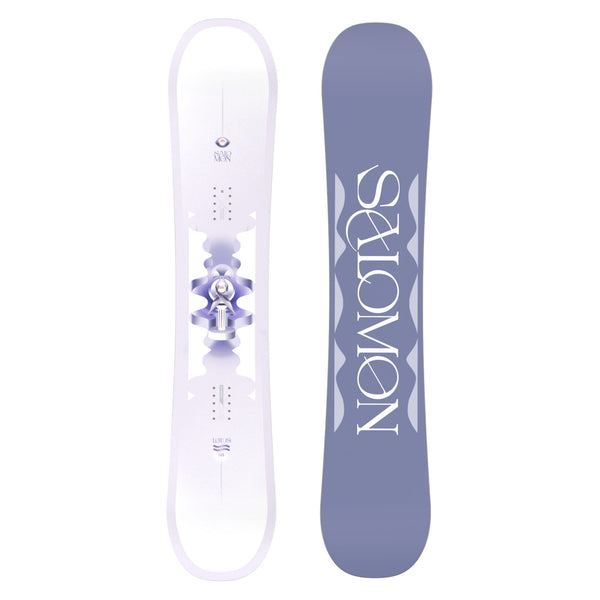
Women’s snowboards are designed around average female body mechanics. They can be softer flexing for easier control, with narrower waist widths to match smaller boots. Many brands also fine-tune sidecut, profile and stance options for better balance and edge hold. That said, many women ride men’s or unisex boards.
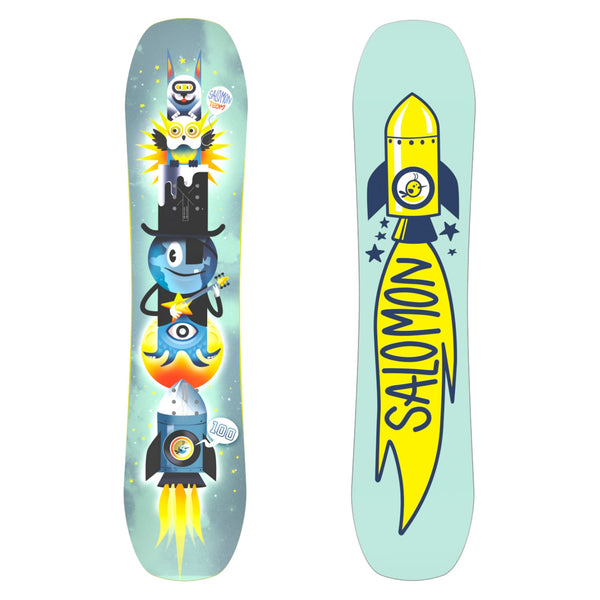
Kids’ snowboards are built to be lighter, softer, and easy to turn so young riders can progress with confidence. They often have forgiving flex and catch-free profiles that help with balance and control, plus smaller waist widths to fit kids’ boots. It’s best to choose an appropriate size rather than one your child can grow into. This avoids unnecessary frustration with a hard-to-handle board that can hinder skills development.
Length
Snowboard length is primarily based on weight and riding style. Your board will usually stand somewhere between your upper chest and eyes, but weight matters more than height. Heavier riders often size up for better stability; lighter riders can size down. Freestyle boards are often ridden a little shorter, while freeride and powder boards may be a bit longer for stability and float. Always check the brand’s sizing chart for the recommended size for a given weight range.
Width
Your snowboard should be just wide enough that your boots slightly overhang the edges (about 1–2 cm on each side) without dragging in the snow. If your toes or heels catch, you need a wider board; if they barely reach the edge, the board may feel sluggish to turn. Many models come in regular and wide versions.
Most modern snowboards work with the major binding mounting systems. Standard 2×4 and 4×4 insert patterns fit almost all bindings, and Burton’s Channel system is compatible with most models. Always check the manufacturer’s recommendations to make sure your bindings and board are a good match.
Our snowboard experts know how to match each rider with the perfect setup. Explore our selection online or stop by our Laval or Brossard stores to get personalized advice and see the latest snowboards from Gnu, Bataleon, Lib Tech, Nidecker, and more.